The Project
The contraption you see below is a musical instrument I have built and designed myself. I have nicknamed it the 'Mickeyboard'.
It may look like a regular piano, but it is in fact a hybrid of an acoustic piano and an electric guitar.
Read below to see how I made it!

Introduction
The goal of this project was in essence to make a musical instrument that was unlike any existing instrument. This was part of an autonomous project in which we (students) could pursue our own interests and define our project. I chose to attempt to make a musical instrument, because I wanted to use the opportunity to design and build a physical product and additionally because I wanted to learn more about music.
Briefing
In order for the project to have a direction I wrote a briefing for myself. In short I wanted to make a unique instrument for experienced musicians. I wanted my instrument to spark creativity and curiosity and encourage musicians to make new music with it.
.jpg)

(Some of these Images will be in Dutch, Apologies)
Inspiration
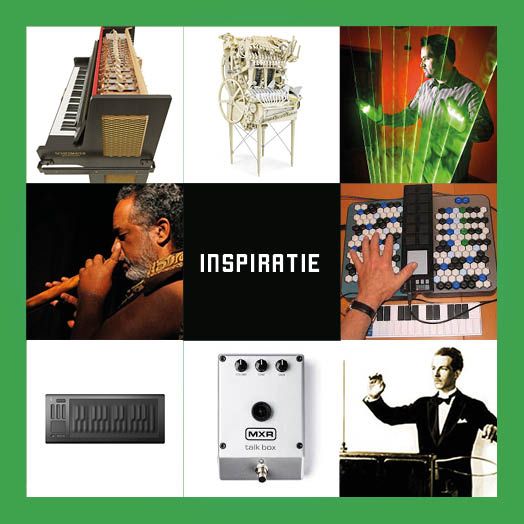
To kick off my research and get a feel for the project I looked up as many odd, silly, strange and fascinating musical instruments as I could. I found that all instruments that you could classify as unique either had a unique sound, a unique method of controlling it, or a novel combination of familiar control and sound.
Experimenting with Materials
I wanted to get a feel for the possibilities when actually building an instrument. So I took a course where I experimented with different methods of making sound. I built two very basic prototypes. Though they look simple, it did take a while for them to work the way I envisioned them.

Theory Research
Troughout the project I looked into a lot of theory concerning musical instruments and product design. I looked at the balance between novelty and familiarity, types of musical instruments and watched documentaries about the history and development of new musical instruments.


Interviews
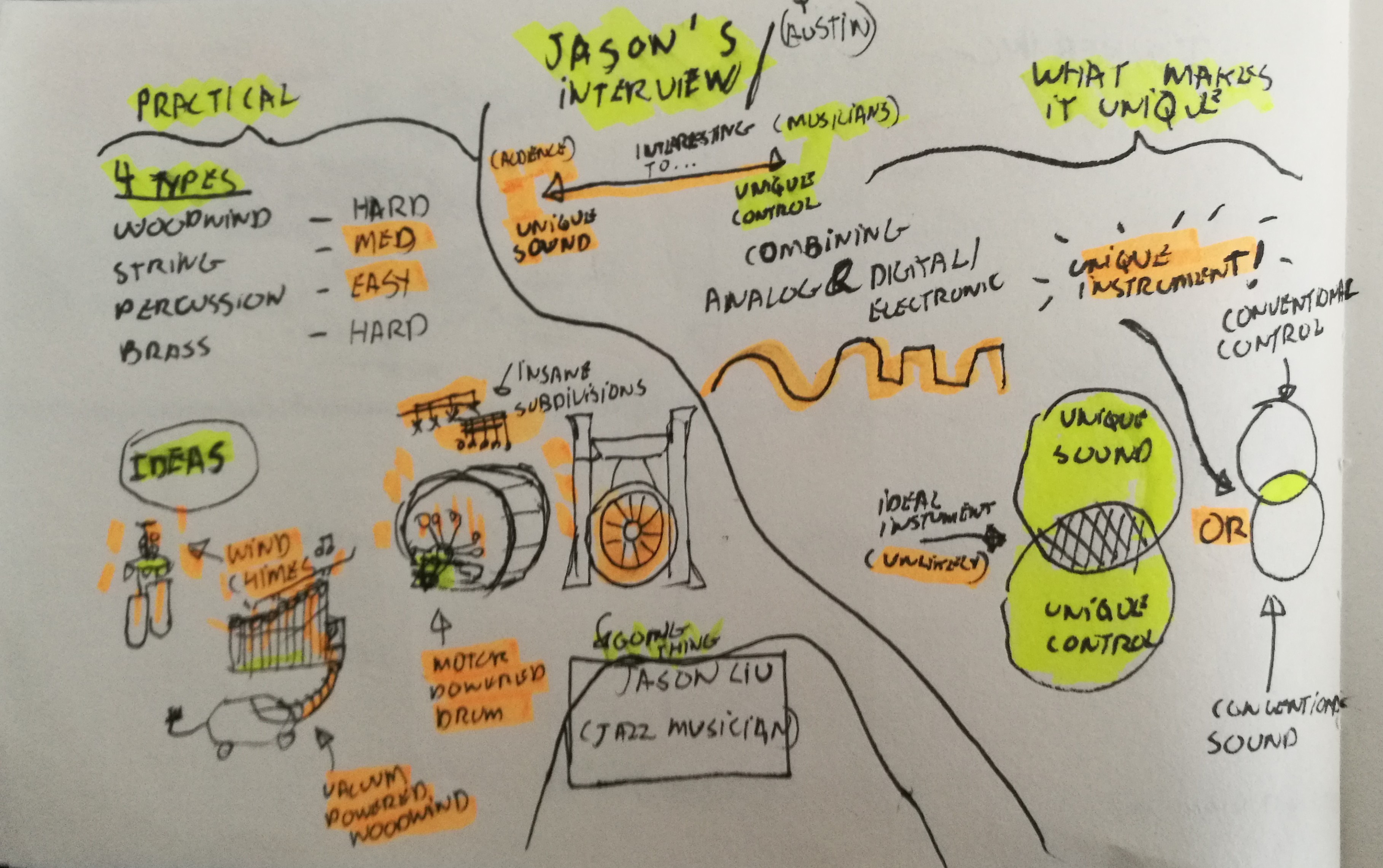
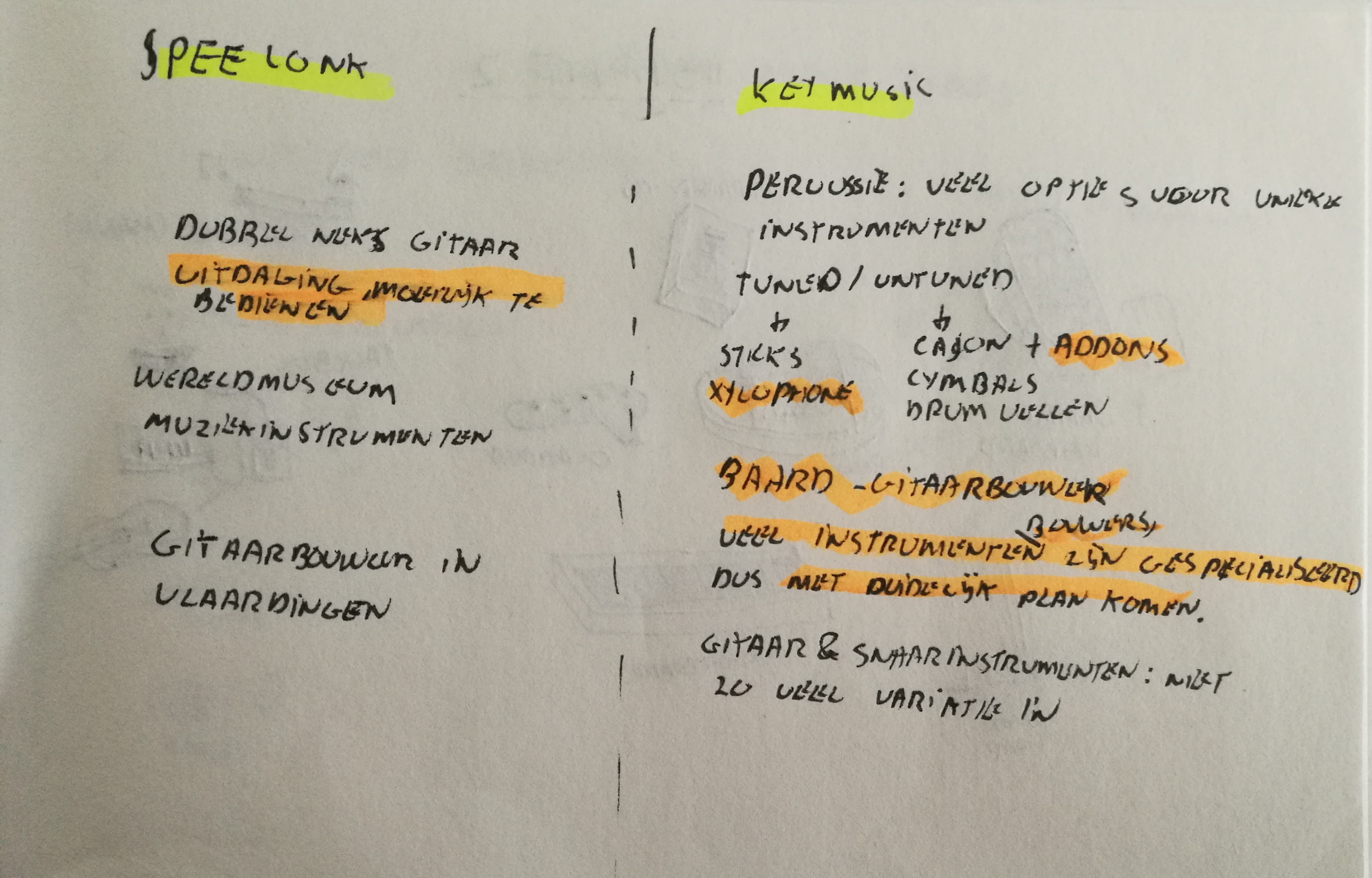
I also did a number of interviews, I interviewed three musicians and also employees and customers of music stores around the city of Rotterdam. Trough these interviews I gained a lot of insight into what moves musicians to try new instruments and what inspires them. They also gave me a lot of their ideas for unique instruments and practical advice for building.
Research Insights
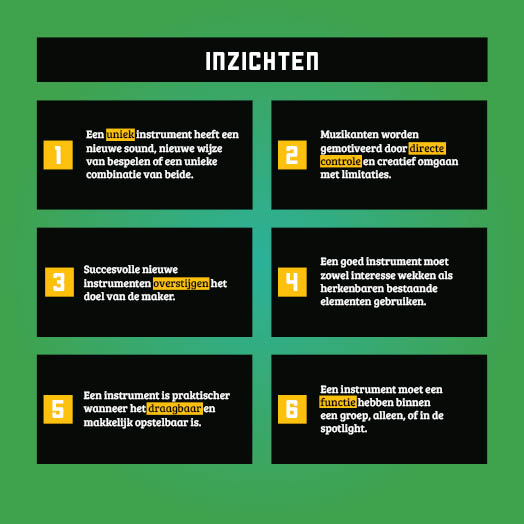
To conclude my research I collected all my insights from interviews, theory, inspiration and prototypes and worked them into guidelines for designing my instrument.
The insights were as follows:
1 - A unique instrument has a new sound, a new mode of control or a novel combination of known sounds and controls.
2 - Successful musical instruments tend to outgrow the original intentions of the maker.
3 - An instrument is more practical when it is portable.
4 - Musicians are motivated by having direct sensory control, or if absent sensory feedback.
5 - A sucessful novel instrument needs to have familiar aspects to be recognizable and accessible as a music instrument.
6 - An instrument needs to have a musical function when intended to play in a group, or cover a broad range when intended as a solo.
Brainstorms
Next I brainstormed to get down as many possible concepts as I could concieve of. Because the first brainstorm didn't yield the amount of ideas I would have liked I took a break to do more research. Then on the second brainstorm I wrote down aspects (materials, functions, sounds) of known instruments on cards and combined them in new ways. This gave me the amount of ideas I was shooting for.

(Brainstorm Card Aids)


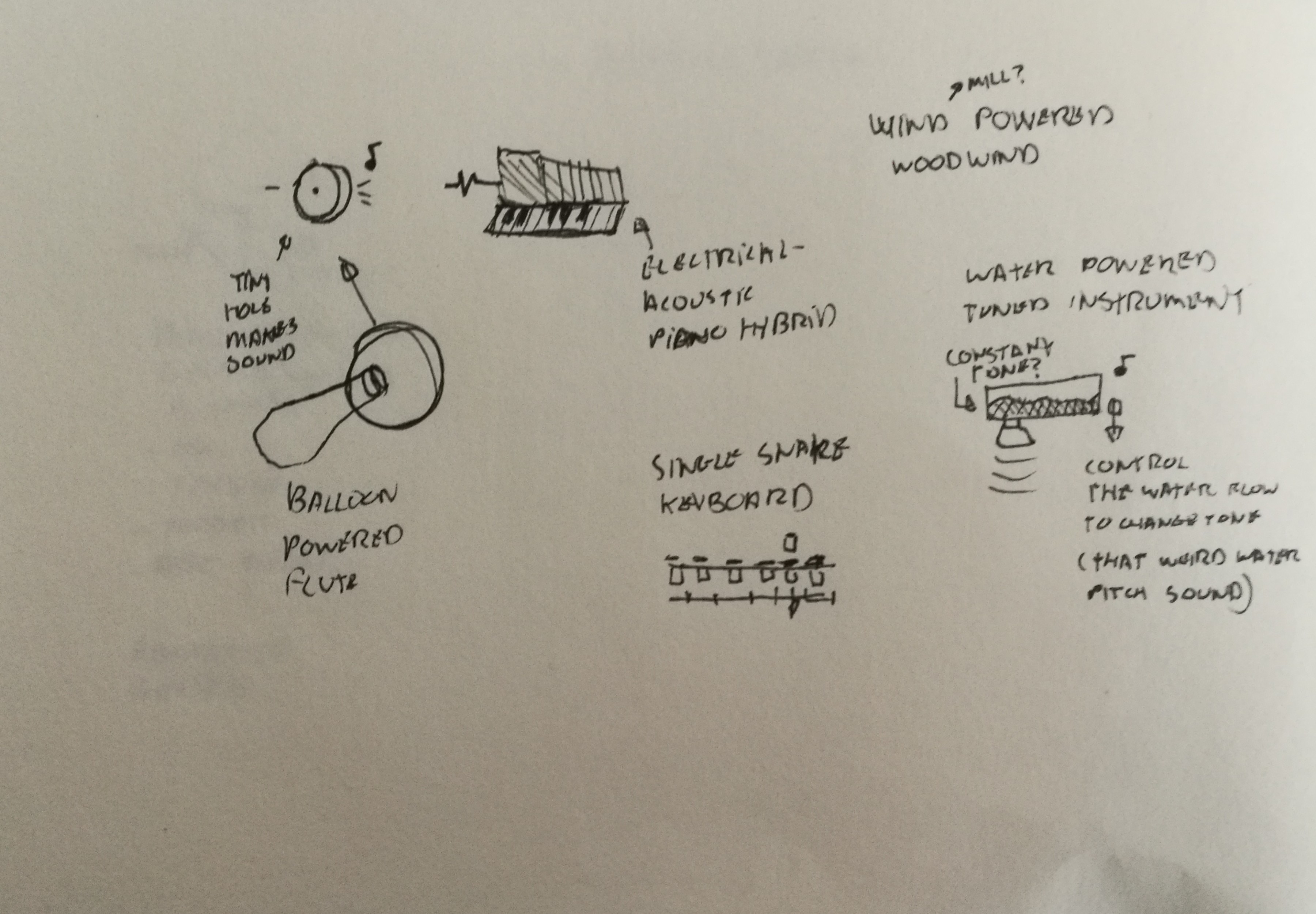
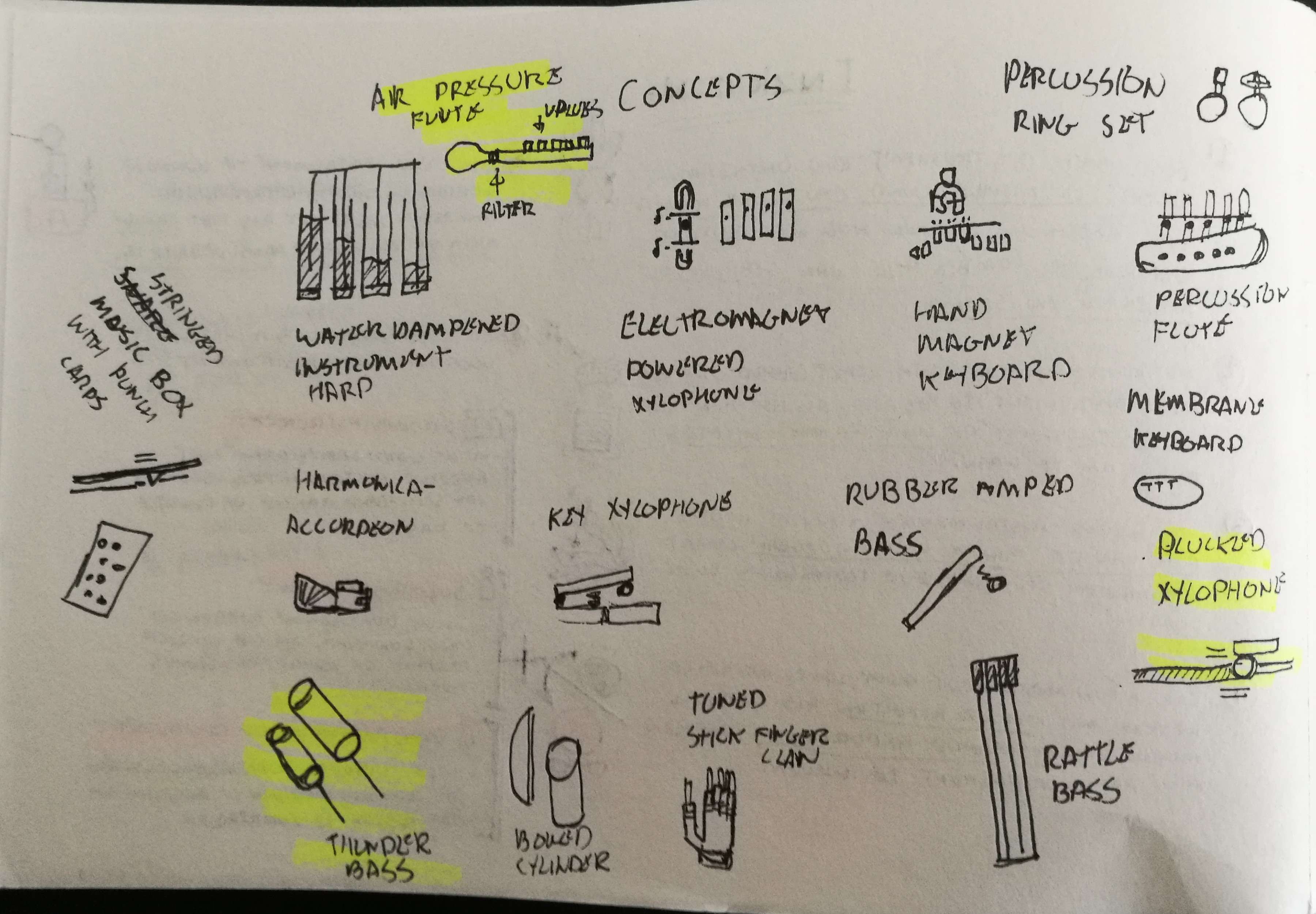
(Some of the resulting ideas)
Making a choice
I chose three ideas and made two of them into prototypes, the third ended up being scratched as it was physically very difficult to execute in practice (which might explain why it hasn't been made before ;) ).

(two finished prototypes)
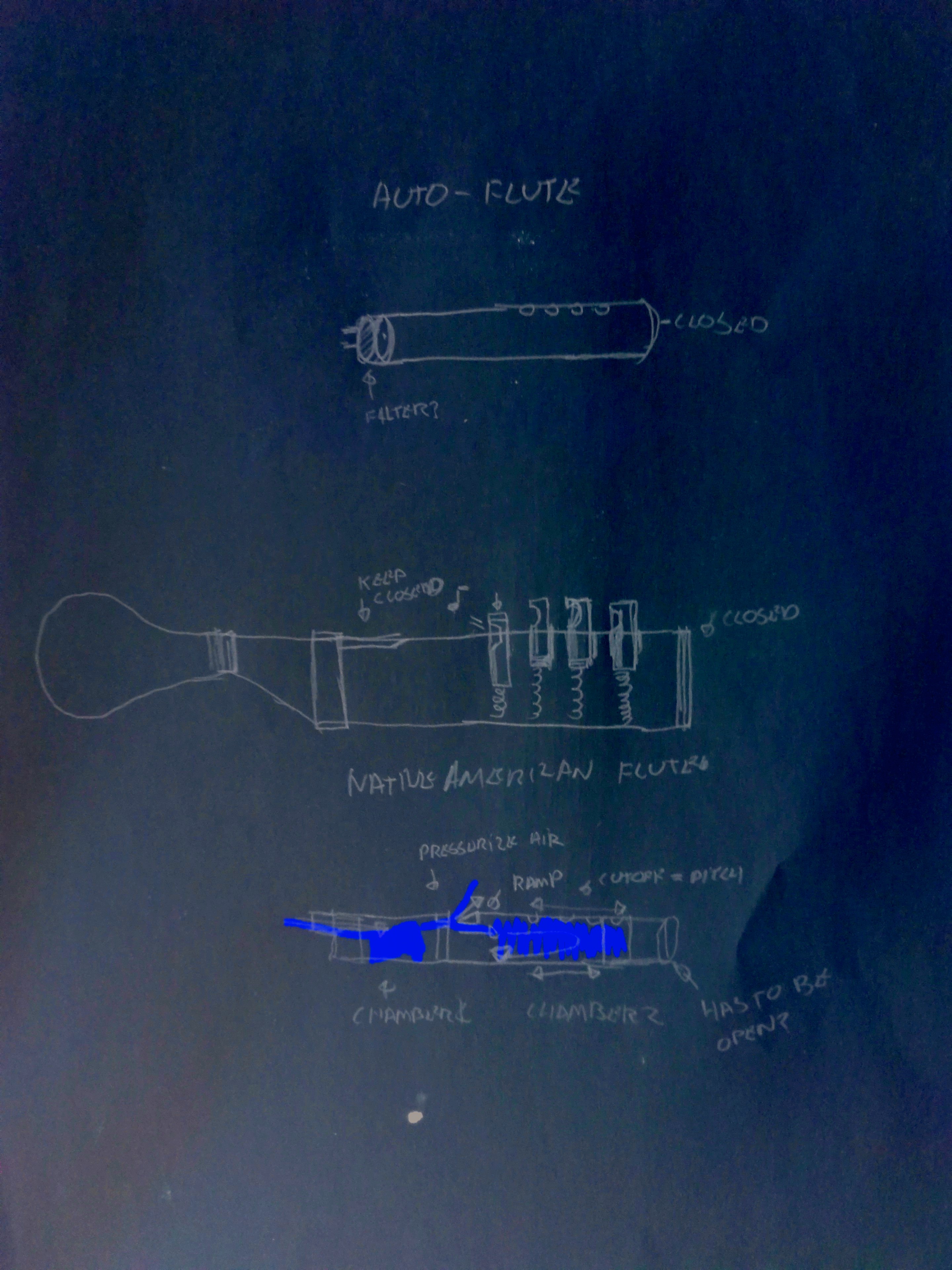

blueprint sketches for 2 of the planned prototypes, the left one proved too difficult to execute
Eventually I chose another idea that I thought suited my guidelines best. I decided to make an instrument that combined an electrical guitar's electronic pickup sensors with the hammer mechanisms of a piano.
Acoustics Research
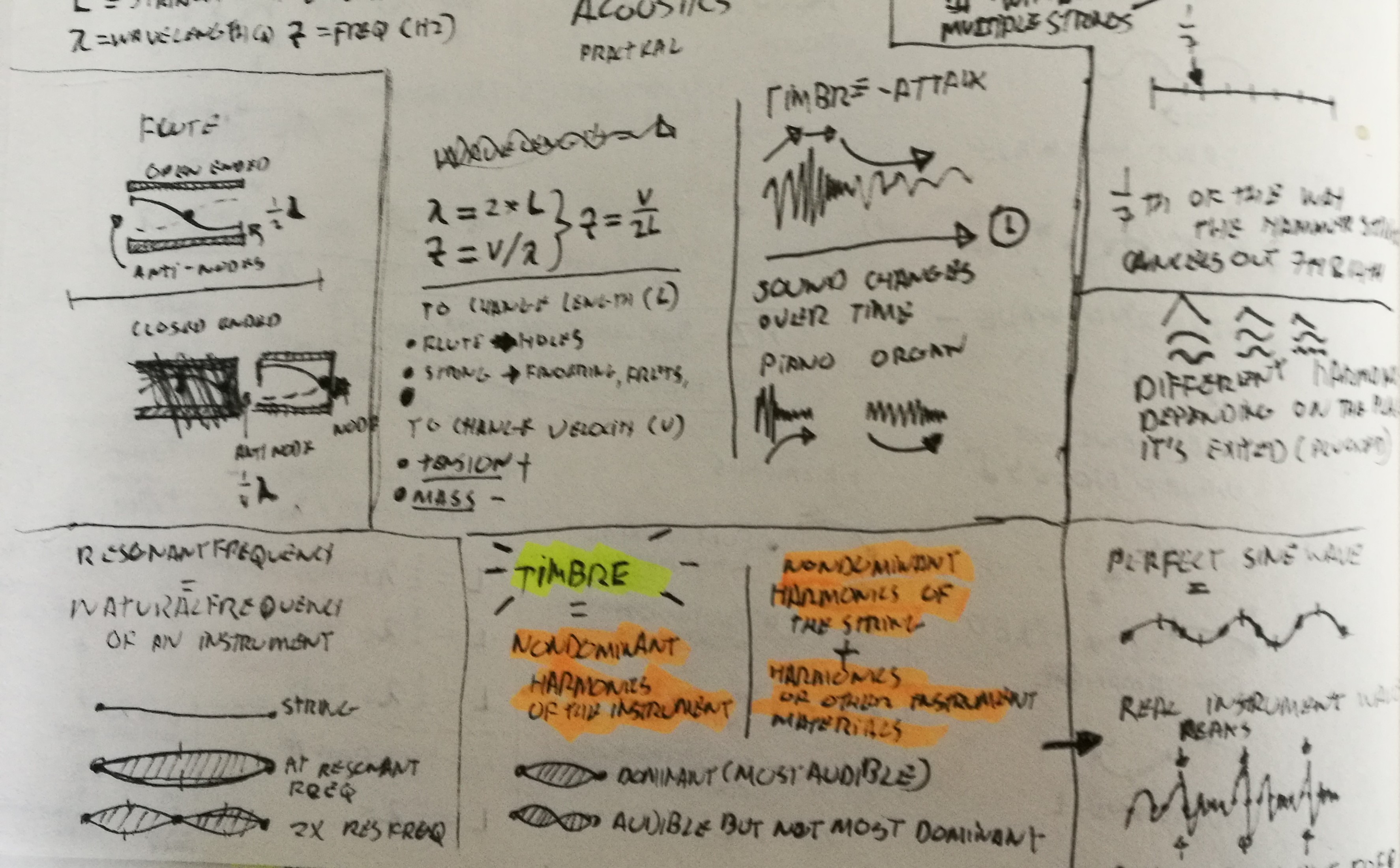
At this point in the process I became aware that I didn't know very much about the physics of musical instruments, so I took the time to research acoustics. I learned about how sound travels, what determines the quality of a sound and how certain frequencies are created.

Prototyping
I broke down the instrument into different components and before building the more complicated parts made a few prototypes to test ideas and catch mistakes before the building process. I built a prototype of the hammer mechanism and experimented with tuning strings and setting up the guitar pickups.

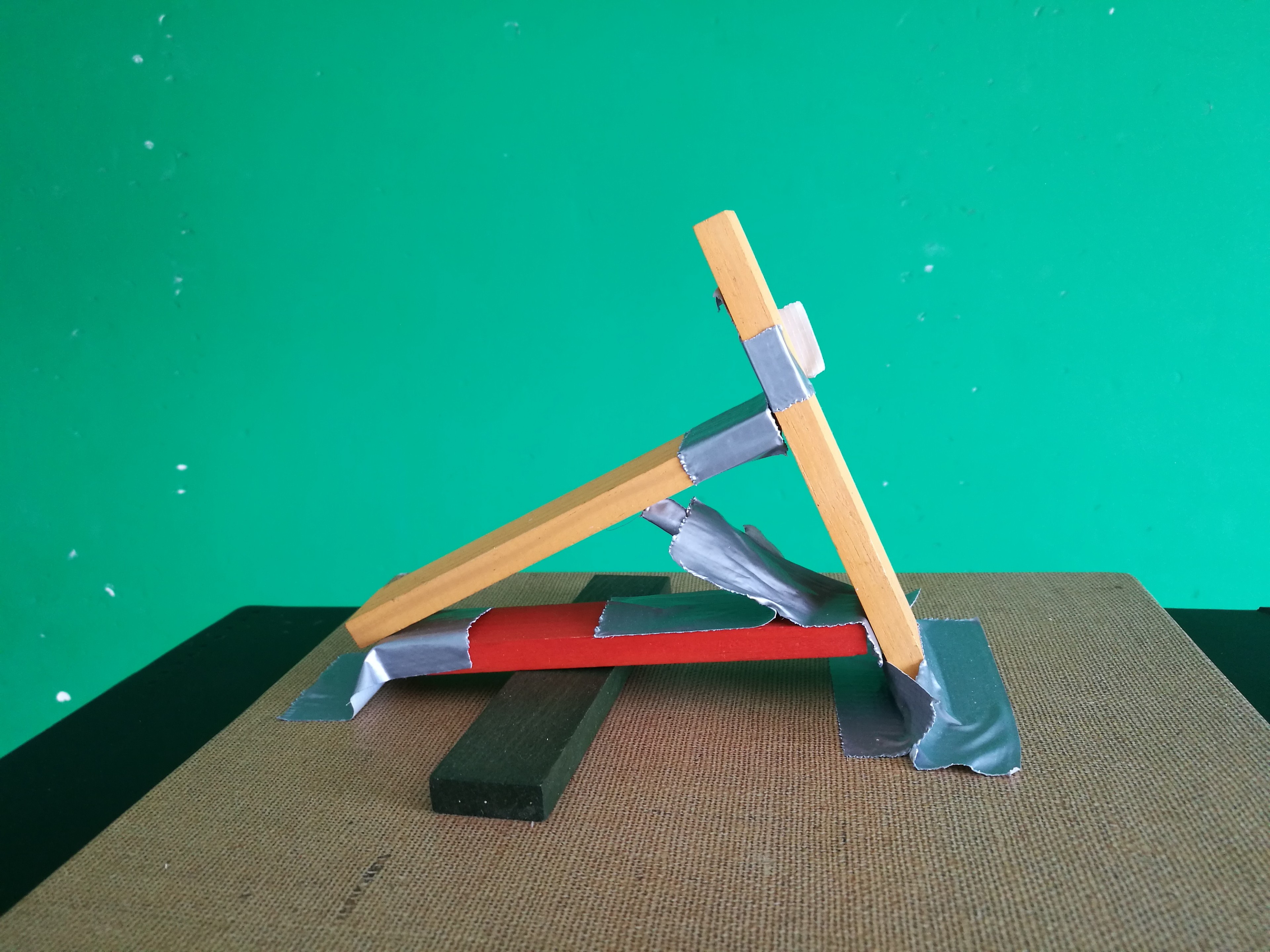
Basic test of the piano key action

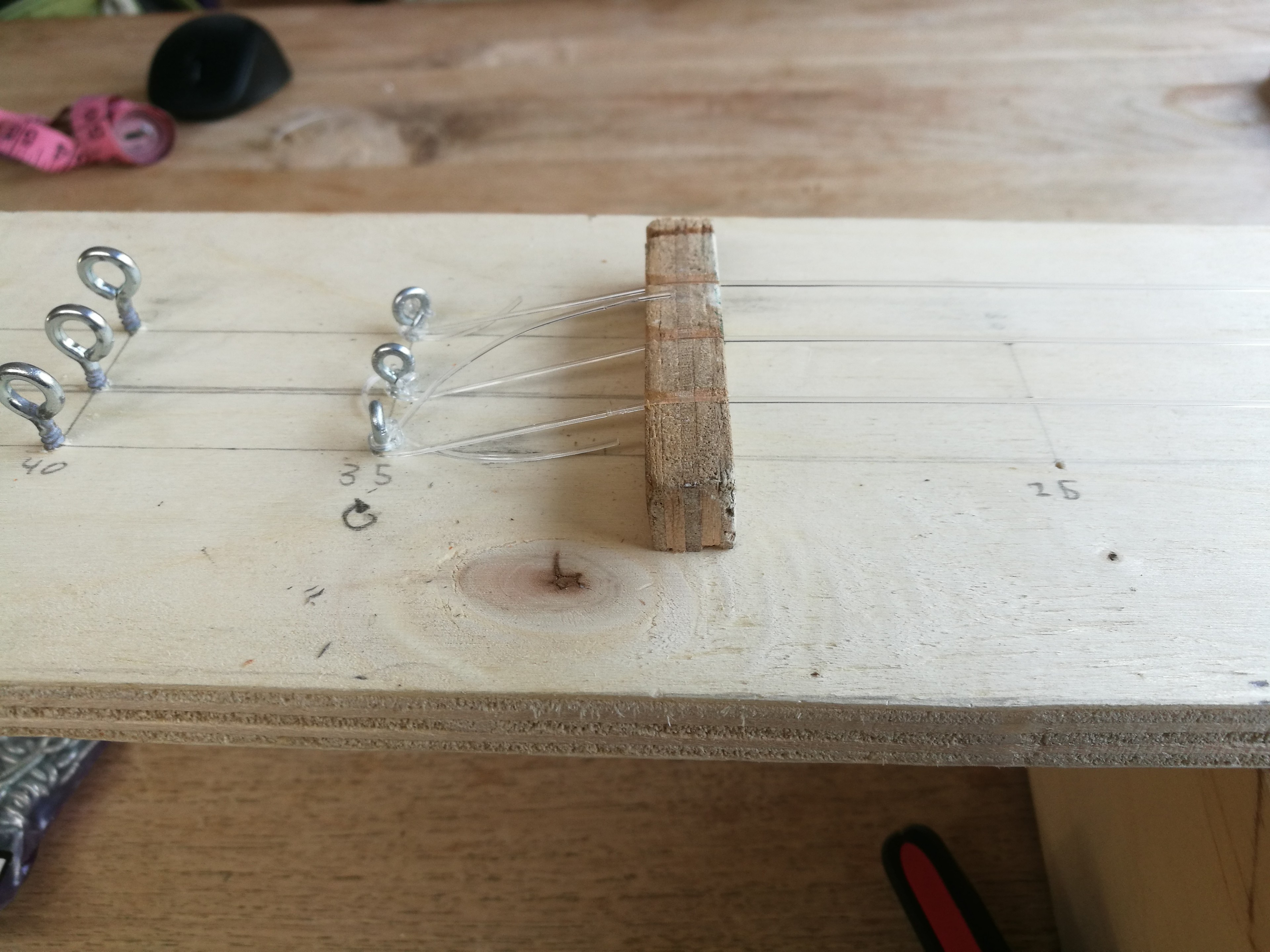
Strings placed on a board, used to test tuning and sensors outside of the instrument
Planning
I did a lot of planning because the project was getting quite large, so I drew up schematics of the mechanisms and made checklists of the building process.
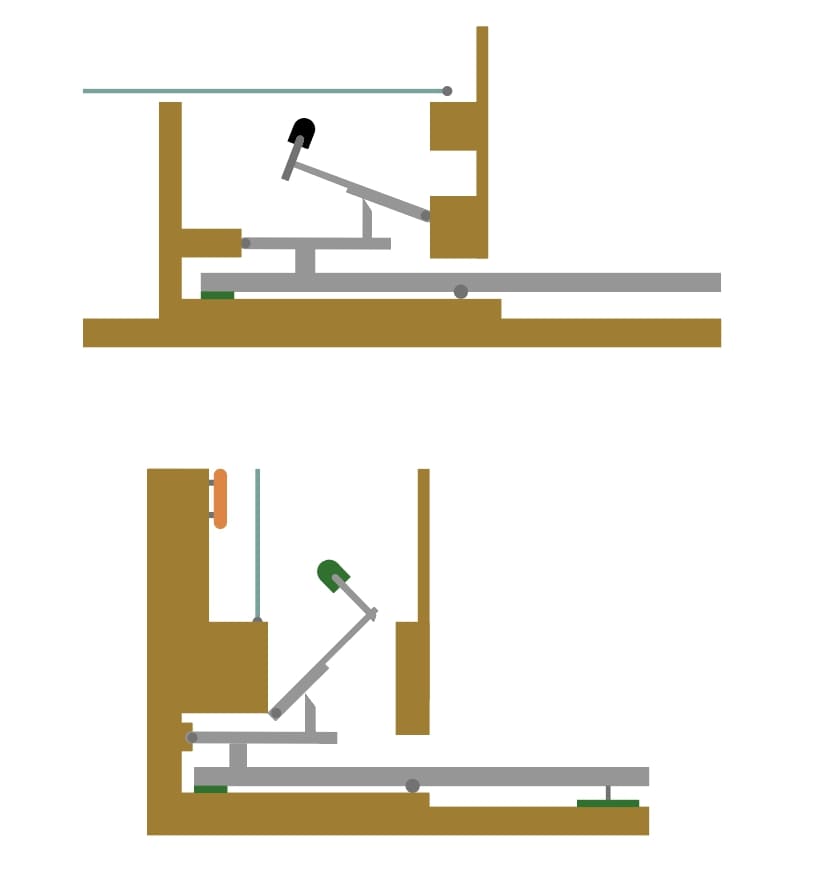
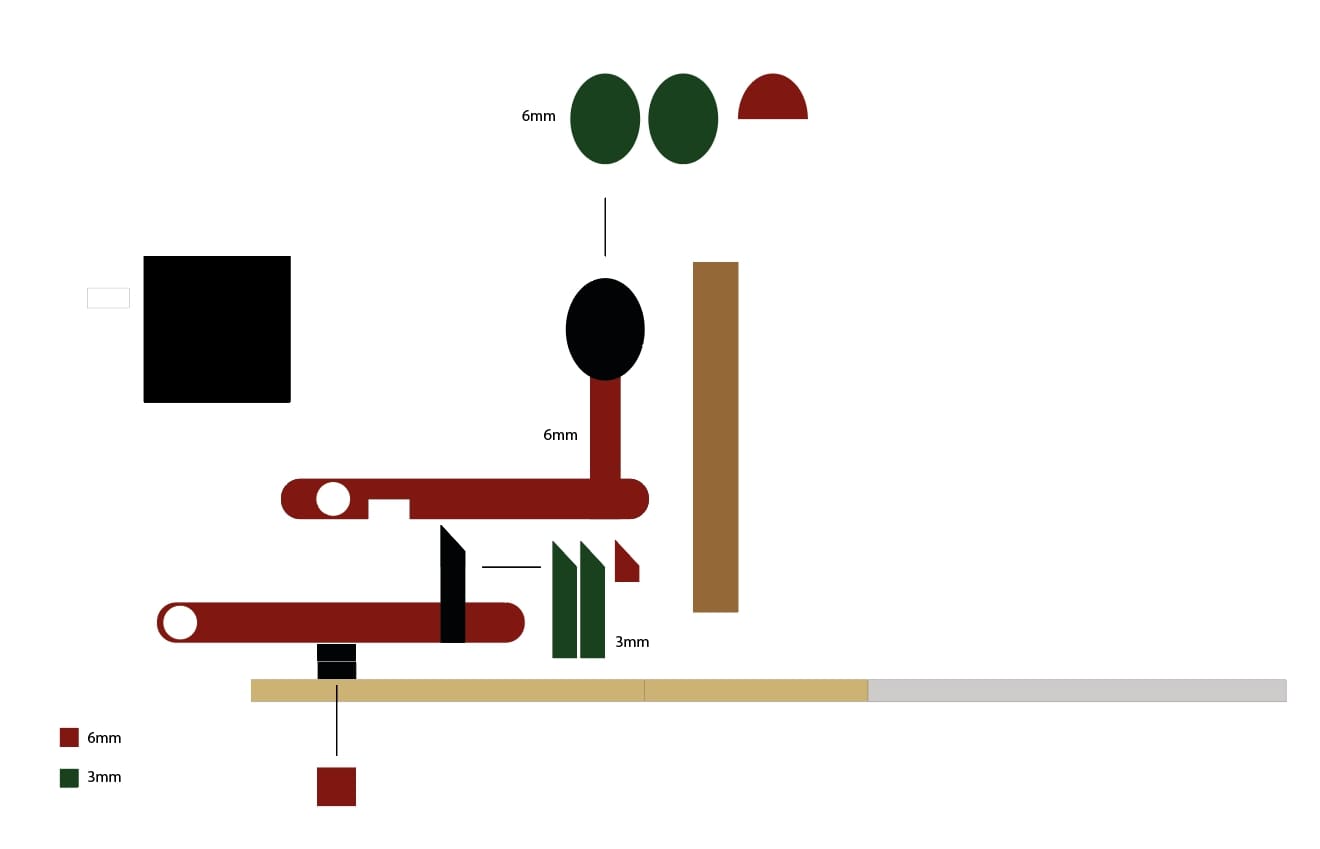
The piano action is a very complex part. I made visulizations and technical drawings to prepare for building it

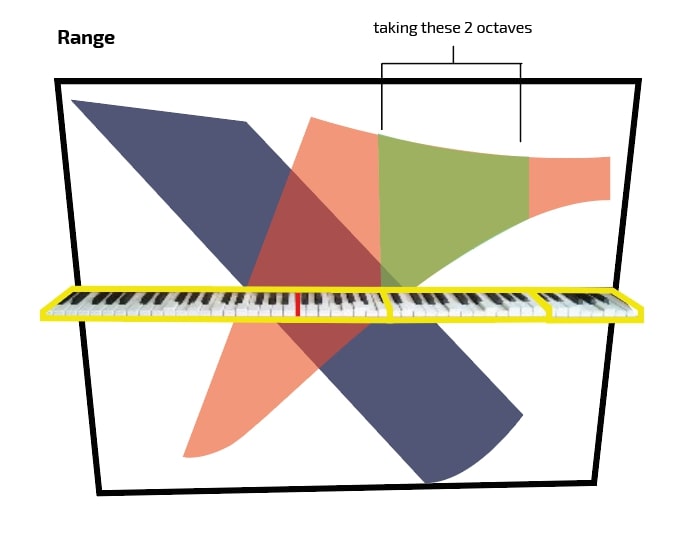
On scale design of the keys and a visualization of the range that was practical for a reasonaby portable instrument
Building
The building ended up being a lot of work. I made precise parts with a lasercutter and plywood, painted keys, tightened strings, and adjusted parts continually. Luckily I had some assistance building the encasement and soldering the electronics.
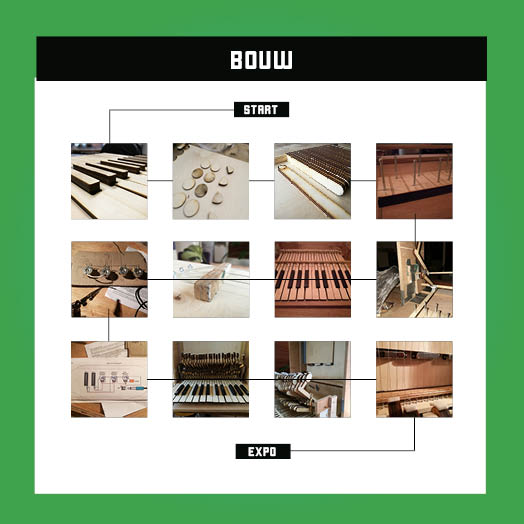
The process of building the instrument from start to finish
.jpg)
.jpg)
.jpg)
.jpg)
.jpg)
.jpg)
.jpg)
.jpg)
.jpg)
.jpg)
.jpg)
.jpg)
.jpg)
.jpg)
.jpg)
Exposition and Reflection
At the end of the project I demonstrated my finished product and got a lot of positive feedback. In reflection I am very glad to have done this project and I've learned a lot about music, building physical products, planning, documenting my progress and working autonomously. I think it worked out well especially since I was initially relectant about taking on such a boundless assignment on my own.
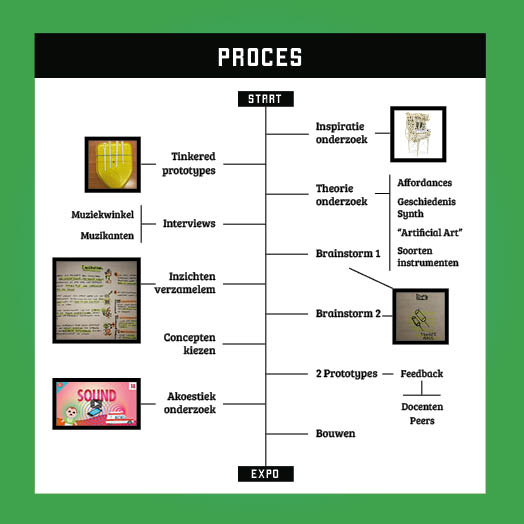
Plans
There are a number of things not yet finished about the instrument, so I intend to continue working on it in the future.